Showing posts with label Written by Jo. Show all posts

Friday, 16 September 2016

Imposter Syndrome

Imposter Syndrome"I don't belong here."

The thought that ran through my head as I was sitting in a cafe, watching people arrive for a book launch, people who all knew each other, and not one of them someone I knew.

When it comes to book blogging, I'm pretty confident. I've been a book blogger for seven years now, and I've honed my voice and writing style, and worked out what works for me in regards to when I post, what I post, and what I read. I have no issues with Once Upon a Bookcase, everything there works how I want it to. It's my hobby, and I enjoy it.

But that's when it's just me, my computer, and some books. When it comes to book events, that's when it happens. The uncertainty, the doubt, the feeling of unease. The feeling that I shouldn't be here, I don't belong with these people, I'm not "good enough" to be part of this. In that moment, I feel like a fraud, that I'm just pretending to be someone that fits in, that belongs, but fearing people are going to figure this out, and ask me why I'm there. And even when I see people I know and politely ask to hang out with them, I still feel it. Everyone else seems to know everyone else. I don't because I don't belong there.

Impostor Syndrome, according to Wikipedia, refers to "high-achieving individuals marked by an inability to internalize their accomplishments and a persistent fear of being exposed as a "fraud". Despite external evidence of their competence, those exhibiting the syndrome remain convinced that they are frauds and do not deserve the success they have achieved. Proof of success is dismissed as luck, timing, or as a result of deceiving others into thinking they are more intelligent and competent than they believe themselves to be. Some studies suggest that impostor syndrome is particularly common among high-achieving women."

High achieving is a bit of a stretch, but I think my blog does pretty well. I enjoy my blog and work hard at it, but I'm always surprised when people tell me how great it is. I tend to often downplay it. And when amongst my peers or other people in the book industry, with my book blogger hat on, I crumble.

This is something I've started to notice when it comes to my lifestyle blog, Jo's Scribbles, too. It's just my little thing that I enjoy doing, but I see those bloggers around me, and I wonder why I even bother. I'm not a part of this group either, and this time, I've not even met many of them. I was astonished when Fiona of The Escapologist's Daughter mentioned one of my posts in her first newsletter, and called me one of her favourite blogs, and when Kathy of I am Kathy B includes me in #FF tweets saying I'm one of her favourite writers. Calling myself a writer is something I balk at internally, yet force myself to do anyway, even while constantly feeling like I'm fooling myself but nobody else. I'm not going to stop doing the things I love, but that doesn't mean I don't feel like a child playing at an adult's game (yes, I have changed the wording of that saying, because it's sexist.).

To be perfectly honest, I've mentioned that I'm fine when it's just me and my computer (and my books, for book blogging), and although that's true, it's mostly because I don't have too many readers, so there aren't as many people to "find me out". I feel it more when I write for other sites, including this one, even with this post. Because you're going to read it and see through it. "Why is she even writing this? Why is she even a team member of Safe Space? Who is she? Why is she even here?" I get so nervous hitting the publish button, or send button on emails when I'm emailing a pitch or a finished piece for other sites. Despite all I've said up til now, despite all I've been told by the people I work with on these sites, this is the piece that's going to give me up, this is the piece that's going to show them that I'm actually no good, and don't deserve to be on their site.

I sometimes find myself feeling similarly in other areas of my life, but it's mainly when it comes to writing that I feel like this. And I don't have any answers. The point of this post is simply to say, "Hey, sometimes I feel like this. Maybe you do, too?" It would be nice to know I'm not the only one who struggles with feeling like I don't belong, that you'll find me out one day.

Jo's signature

-
If you enjoyed this post, you can find more on:
Bloglovin' | Twitter | Jo's Scribbles

Friday, 2 September 2016

Going Without a Mobile

Going Without a MobileIn this technological age, we've come to rely on technology so much that it's almost automatic to reach out for our phone or our laptop without a second thought. But on Tuesday I realised just how attached I had become.

My Mum and I went out to a preview movie screening on Tuesday. Because it was a preview screening, we were told we wouldn't be allowed mobiles in the cinema, and as neither of us wanted to hand our phones in, we decided to leave them at home.

But the prospect of spending most of the day without my phone on me was a daunting one. Laura wrote earlier this year about having to go without the internet for a few weeks, but when it came down to it, it wasn't so much that I would be without my email, Twitter, or Instagram that worried me, but the simple fact that I wouldn't have a way to contact anyone.

I'm a bit of a worrier, and have often been told that I think and/or worry too much, and this was the case on Tuesday. I was genuinely a little scared to leave the house without my phone. The one day I leave the house without my phone is the one day I'm going to need it, I was sure. Well, not sure, but that was the worry. Anything could happen. And while my phone wouldn't necessarily stop bad things from happening, but at least I'd be able to try and phone someone and ask for help, or let them know I was ok. Without my phone, I felt very alone and completely cut off.

The other not as important by equally annoying thing about not having our phones with us was not knowing the time. Neither of us having working watches, and so we've come to rely on our phones to know what the time is when we're out on about. When you have to be somewhere at a specific time and have no way of knowing what the time is, it's really bloody frustrating. I was so much more aware of how long things were taking, the walk, eating my food, and so on, worrying they were taking too long. We were actually fine as we left pretty early, but I did feel lost not knowing what the time was.

As I said, I wasn't too bothered about checking my email or Twitter or Instagram, but there were a few moments when not having immediate access to the internet, like I'm used to, was a little jolting. Occasionally, I wanted to look something up, when I wasn't quite sure of something I was talking about with Mum - the title of a book, the name of an actress. I saw a statue I would have quite liked to Instagram, but no camera nor internet access. It was only slightly annoying, nowhere near as frustrating as I thought it would be, and that itself made me think. I realised I spent more time looking up than looking down and noticing more about my surroundings than I would have if my phone was on me. I didn't really mind not having access to those apps, and the world didn't end because I wasn't checking or updating them. Perhaps - dare I even say it? - perhaps I can live without those apps.

I'm one of those people who can remember a time when hardly anyone had mobile phones. We got by fine. We never worried about not being able to contact people, there were phone boxes if we needed them. I remember when my brother and I were allowed half an hour online a week each, on a Sunday, the sound of the modem as it dial up to connect to the internet, before there was broadband. When it wasn't available, we managed perfectly well. But now, we're so used to having such things ready at our fingertips, to be without them is a shock to the system.

Perhaps we could all do with leaving our mobiles at home every now and again?

Jo's signature

-
If you enjoyed this post, you can find more on:
Bloglovin' | Twitter | Jo's Scribbles

Friday, 19 August 2016

When Your Mum Becomes Your Friend

Mother and DaughterToday, I want to talk about my mum and my relationship with her. As a child and teenager, both my parents were pretty strict. My brother and I had rules and boundaries, and neither of my parents would take any crap from us. No-one likes their parents really laying in to them, right? So we were pretty well behaved children (apart from the odd fight between ourselves). Which led to us getting on pretty well with our parents as youngsters. And like mums are, Mum was always there; when we'd fallen over and hurt ourselves, when we needed help with our homework, and when we just needed someone to talk to.

I don't know at what age my relationship with Mum changed, but it did. Sometime in my late teens, I'd guess, Mum stopped being simply My Parent and became my friend. That might sound kind of corny, but it's important to me, and something I'm so grateful for. There are a lot of people out there who don't have great relationships with their parents, and I'm just so glad that I do.

Mum is my mother, and I am her daughter, but we have the kind of personalities that just work well together. Mum had me a month before her 19th birthday, so there isn't a huge age gap, and although in some ways we're pretty different, in others we are pretty similar. We both make the effort to find time for each other, and will have days out, whether it's going to the cinema, going shopping, or going out for a meal. Other times, we'll plan nights in. We'll get a take away, buy some goodies, and watch a movie. It's not just so we can have some mother/daughter time, but because we genuinely enjoy each others company.

There's the added bonus that because we're mother and daughter we can trust each other to be honest when asking the other for advice or their opinion, when it comes to something small like outfit choices, or for help making a tough decision (though, to be honest, that is more me asking than Mum). I love how I can talk to my mum about anything, not just as my mother, but also as my friend. Depending on the subject, sometimes she'll be in full-on mother mode if she's worrying about me - after all, I am her baby - but she will also talk to me as a fellow woman. We'll have deep discussions about topics we feel are important, and sometimes we'll disagree, and sometimes we'll educate each other. Sometimes Mum will give me the perspective of someone with more experience, and sometimes I'll give that of someone a little younger, for a generation where things are changing when, for example, it comes to society's attitudes about women.

As you can tell, I've always been pretty close to my mum, but I have appreciated our relationship more since my nan died. Mum was close to Nan, and Nan's death, though expected, broke her heart. She no longer has her mum, which makes me even more grateful that I have mine and that our relationship is so wonderful, yet so sad that she no longer has that mother-friend in her life. It's made me think about the inevitable moment when I will lose my mum, and how absolutely devastating it will be. But then I remember I still have her, and fully revel in the time we spend together.

I don't think there's anything quite like a mother-daughter relationship, but that relationship becomes even more special when you can call your mother your friend.

Jo's signature

-
If you enjoyed this post, you can find more on:
Bloglovin' | Twitter | Jo's Scribbles

Friday, 24 June 2016

Listen to Your Body

Head in handsI was umming and aahing about writing about this topic for today, because I have no real answers, no real conclusion. But then I read Faye's post, When Your World Turns Upside Down (which is incredible, do read if you haven't already), and realised that sometimes talking about things even when you don't have the answers can be helpful - for yourself and for others - and maybe I need to admit some things to myself.

Ever since I was a teenager, I have known that my body reacts negatively towards stress, though it only ever affected my periods. If I had a presentation at school, or exams coming up, or, as I got older, had interviews for jobs, I would get nervous. Those nerves would guarantee I would miss a period - or rather, it would be a few weeks late. If, for example, my period was due in the second half of the month, and any of the above was happening, I wouldn't have my period until the first half of the next month. It would be late by two or three weeks. And, really, even silly things like working up the courage to talk to that guy would make my period late. It just became normal for me; my body didn't like being even a tiny bit nervous, and so my periods were irregular as a result. But over the past two years I've noticed my body is even more affected by stress.

As I've talked about before, my Nan died of cancer last year. In 2014, when we found out her cancer was terminal, I was distraught - completely devastated. For a while - until I decided I just couldn't think about it. It was inevitable, there was nothing I could do, so why spend the whole time worrying, fearing, and being upset by it. Of course, I was still upset, but I just decided to concentrate on other things, and enjoy the time I had left with Nan. But, despite not to dwelling on it - and actually genuinely not worrying - subconciously, it was affecting me, and my body paid for it.

For about three or four months, I would have several migraines a month. I was having such a hard time sleeping - not because things were playing on my mind, but simply because I couldn't go off, and even once I did, I would wake up numerous times in the night. More than once I'd go to bed at a reasonable time, and still find myself awake at 5am. I started experiencing numbness in my arms, which was a result, my doctor told me, of me taking quicker, shallower breaths I didn't even notice. And I started having panic attacks.

I got on the bus one morning to go to work, and two stops in, something just wasn't right. I started having difficulty breathing, and I was overly hot. The bus wasn't very busy, but I felt there were too many people on the bus, it was too crowded, I need to get off; something wasn't right with me, and I couldn't breathe! I got off at the second stop, sat at the bus stop for a bit, thinking maybe I was hot and needed to cool down. But no change. I had no idea what was wrong, but something wasn't right, something was happening, and I was so, so scared. Partly because I didn't know what was happening, but also because it was another symptom. I managed to make my way home, sobbing, running to my Mum, freaking out, and her telling me I was having a panic attack. Slowly, she managed to calm me down. Over the next few days, she had to travel in to work with me, because I couldn't stay calm - even though there were no problems at work that were worrying me, as soon as I started to get ready to leave, I could feel the panic rising.

I went to my doctor with all these various problems, and she told me it was very likely down to my Nan's terminal diagnosis. She referred me to a counsellor, but because of clerical issues (i.e. people not picking up the phone) nothing ever came of it. And I didn't really worry about, because by this time, all my symptoms of stress had gone. Migraines were under control, no more panic attacks or numbness or sleeplessness. I was fine.

The migraines crept up again, though, at the end of last year, the beginning of this. Last year was such a terrible year, and all the death and illness had really taken it's toll. And so migraines. Again I saw my doctor, and my medication was increased, and instead of having it when needed, I was to take it every day. And I'm pretty glad to say that on the whole, those pills are miracle workers.

More recently, there have been issues at home. Financial difficulties due to my Dad being ill. My brother and I were covering most of the bills, but I was worrying we wouldn't be able to pay for everything. Would we actually be able to eat? Can you imagine asking yourself that question? That being a genuine worry? The stress caused patches of eczema to form all over my legs for the first time in my life, and - surprise, surprise - another migraine. But that question would fly through my head while walking down the street, and I would feel a panic attack brewing. I'd have to try and slow my breathing and talk myself down; "Joanne, you're ok. You're fine. Of course you'll eat, even if it's not what you're used to, you'll eat. Everyone will eat. You'll all be ok. You're fine, Joanne, breathe." This happened maybe two or three times. Not full blown panic attacks, but still.

I've been talking about these recent events in much more detail with my friend and penpal Caoimhe in our letters. About these almost-panic attacks, about my problems at social events, and even some issues I have talking on the telephone. She has some experience of mental illness, and talking with her, I think I might have some form Anxiety. Possibly. And I think I might need to see my doctor to discuss it. But I don't know; when I'm not stressed, I'm fine? (Except when faced with social situations. Or certain phone calls.)

I don't know if they all tie in together - are migraines a symptom of Anxiety? Or are they both just caused by stress? - but what I do know is that my body is hugely affected by stress, and I really need to pay attention to it. I don't know what the answer is; there are a lot of things that are out of my control - I can't do anything about other people's health, and the stress that can cause. But I do know I can listen to my body, and know when things have to change. I can't stop the symptoms of stress when I can't control what's stressing me out, but I can look after myself a little more when my body is telling me things are just not ok.

Kathy Brown is a writer I really admire who writes such incredibly beautiful, insightful posts. In one of her recent posts, A Little List of Life Savers, she says:
"...I've learnt that there are things you can do: simple, tangible things that you can do to stop yourself from drowning: to take a small level of control over your life when the dark cloud creeps in: to distance yourself from that inherent, daily hum of fear, or the desire to run away screaming, nude and wreckless, because 'OMG, LIFE.' To do something, anything, with the day, because sometimes, that's all it takes."
Kathy reiterates this in her latest post, How to Love Yourself:
"On the days you feel like you're drowning, because there will be many of those, do at least one thing, one small, tangible thing that gives you a sense of control, a sense of something. Brush the knots out of your hair, do the crossword, wander to your favourite cafe and order yourself a slice of that cake you love: the one with the berries the same colour as your favourite lipstick and the fresh cream that lingers, like an unexpected kiss, on the corners of your mouth. It's there, somewhere, that little beacon of light, even when darkness blinds you."
I need to listen to my body, and go to the park by my house and sit by the lake, and watch the water droplets from the fountain dance in the breeze. I need to have a soak in the bath. I need to read a book and get lost in someone else's story. And I need to allow myself to feel, to cry, and to ask for the cuddle. Because maybe being scared and upset is just what my body needs me to feel, even if I think I'm wasting time. Maybe I need to voice my concerns about our finances, and get that reassurance, that actually, we will eat, we will get by, things aren't quite that dire just yet (which I did, eventually).

I don't know where this will lead for me. Maybe I'll discover I have a mild form of Anxiety. Maybe I'll need to learn techniques to cope with stress so I don't end up getting ill. Maybe this is just how my body works, and I'll just have to live with it. But I know when my head isn't in a great place, my body pays the price, so I need to start being gentle with myself, allow myself to feel, and get elbow-deep into self-care.

Jo's signature

-
If you enjoyed this post, you can find more on:
Bloglovin' | Twitter | Jo's Scribbles

Friday, 10 June 2016

Learning The Value of Money

MoneyI've always been quite good with money. I'm not on to splurge on really expensive things, not unless it's something I need and/or will use regularly. I'm not interested in the latest "thing" - whether it's clothes, shoes, bags, mobiles, other technology and so on - because it's new and everyone else has it. If I don't want it or don't need it, I won't get it.

My brother and my dad say I'm tight, but I consider myself to be careful. When out shopping for clothes, if you're in my company, it's quite common to hear me say, "Oh, I like that!" before going over to take a closer look at whatever caught my eye, look at the price tag, and then say "Not that much," and walk away. I just really don't see the point in spending money on expensive things, when, in my opinion, there are better things I can spend my money on. I always end up thinking, "I could buy that single top, or I could by several books, take my mum to the cinema, or buy several other, cheaper tops..." I like value for my money, and I'm not going to by something just because it has a logo or a name on it.

Despite being careful with my money, I've had my eyes opened recently to how frivolous I can be with money, too. We've recently been having some financial difficulties at home, and money has been extremely tight. Food needs to be bought, bills need to be paid. A day out shopping just to get out the house on a day off wasn't feasible. If I was going out and might be thirsty, I'd have to take a bottle of water with me instead of buying one, things were that bad. Every penny was needed. I couldn't just buy things because I wanted them.

Unfortunately, our financial difficulties just as I started putting on weight. I went up a dress size, and most of my clothes no longer fit. I had already started to replace the clothes that needed replacing, when we started having problems, but I wasn't done. There were certain things I simply needed, but I now had to be extra careful with my spending. I could no longer shop for just what I wanted; I had to think carefully about what I was buying. It meant turning away from clothes I would have liked, but simply couldn't afford right now. As well, I have two weddings coming up, and I no longer had any wedding-appropriate clothes that fit. It was so stressful; trying to balance buying the things I needed along with making sure I had enough money for our basic necessities.

There were so many things I had to say no to myself about. I had just got myself to the point where I wasn't going to let fear stop me from doing the things I wanted to - but then not having enough money stopped me. It's so disheartening to have worked up the courage to go ahead with something that has scares you, and then not be able to do it anyway. But on top of that, I wanted to take my family on holiday this year. I wanted days out to see and experience things. Even thought things are a little better now, I honestly don't know if I can save enough now to make these things happen.

I think money is something most of us take for granted - whether we splurge, save, or are careful with our spending. It's just there for us when we want it, to buy the drink, or the chocolate bar, or the bag of crisps. But when life happens and suddenly money is scarce, you really come to realise how much you spend on nothing. That £1 I would normally spend on a bottle of coke was now needed to buy four pints of milk, or to go towards buying a loaf of bread. Scrimping and going without isn't fun, it's actually damn stressful, but I now realise I'm not quite as careful with money as I originally thought. It's made me look at money in a completely different way. Of course I will spend the odd few quid on things I want as a treat, but now I really know the value of money, and will make more thoughtful decisions on my spending in future.

Jo's signature

-
If you enjoyed this post, you can find more on:
Bloglovin' | Twitter | Jo's Scribbles
0

Friday, 27 May 2016

Connection Through Snail Mail

Connection Through Snail MailI'm a strong believer in the importance of connection; of working on and nurturing the relationships we have. Nothing beats a face-to-face conversation; sitting down over a cuppa, catching up, and physically being there to offer a hug or a supportive squeeze of the hand. Actually being there, in person, with the people you love and who love you.

But let's face it, that's not always possible. We're busy people with busy lives, and some people might not live a bus ride away. There may be those friends from school we haven't seen since going to uni. Those friends from uni we haven't seen since moving after graduating. Friends from previous jobs we don't get to see so much of now we're working elsewhere. Seeing these people face-to-face can require not only time, but also money, and as someone who has been having some financial difficulties lately, I know it's just not always possible.

And so we rely on what we do have. We live in a fast paced, digital world where a message - whether through email, social media, or various messaging apps - can be sent within seconds. It doesn't require much thought, time or effort to send a message these days, and in my opinion, it leaves a lot to be desired. You're talking, but there's no real connection there. Maybe if you're using FaceTime of Skype. But what if you're not able to?

Laura wrote a few weeks back on her experience of not having access to the internet. What do you do then? Well, you could always make a phone call! It's not perfect, but at least you can make a connection when you're able to hear each other and discern tone and emotion. But it still relies on technology. What if you're mobile breaks, or you run out of minutes, or it gets stolen, or...? And you're one of those people who no longer has a landline, or work is being done on the telephone lines, so you can't use it anyway? No internet and no phone. How do you communicate then?

There is a way. It's relatively inexpensive, but kind of old school, so most people don't think of it anymore. Snail mail.

I'm passionate about snail mail. There's a lot to be said for handwriting someone a letter. Real connection can be made through intentionally taking the time out of your day - making time for this person - and showing them you're thinking of them by sending them a note the old fashioned way. It requires effort, it requires time, and I'm telling you, there's something magical in receiving a letter from someone knowing they set aside some time for you, that they put in the effort to write a letter, go and buy a stamp, and popping it in the postbox for you. Snail mail isn't just a way of nurting your relationships and fanning the flames of connection with the person you care about, snail mail is also a gift.

And you can also give this gift of time and effort in physical form to someone you hardly know. I also think there's something special about becoming penpals and getting to know someone through letters; building a friendship through the written word. There's an excitement to waiting for a reply, and devouring the words of this new friend with relish. And writing back - telling them more about you, answering their questions, catching them up on your life - is it's own kind of exquisite, knowing the person your letter is going to is interested, genuinely cares about what you have to say, and wants to read your words. There really is something uniquely magical about seeing and being seeing, creating that connection, through letters. It's wonderful, and it's also really beautiful.

So how about it? One day of the week, you set aside half an hour, an hour, two hours - depending on what you want to say - and handwriting a letter to someone you love. Maybe a relative - a grandparent, an aunt or uncle, a cousin? - or an old friend - someone from school, or uni, or a previous job? Need some ideas on what to write? Alexandra Franzen has a free workbook One Letter Today (scroll down just a little), with ideas on who to write to, and templates on what to say. Or perhaps you'd like to receive a letter? You might be in luck, as I'm open to letter requests from whoever wants one.

Breath life to connection one sheet of paper at a time.

Jo's signature

-
If you enjoyed this post, you can find more on:
Bloglovin' | Twitter | Jo's Scribbles

Friday, 29 April 2016

Age is Just a Number

Age is Just a NumberWe live in a society that makes a big issue of age, and make a lot of judgements and assumptions about people based on how old they are, and it's something I don't understand.

If you want to be taken seriously, you need to be an adult; don't expect society to really pay attention to what you say if you're a teenager or younger, or if you're elderly. Society will collectively smile and nod while you're talking, but roll their eyes once your back is turned. It's atrocious that teenagers are patronised and the elderly are thought past it, as if age is some sort of indicator for intellect or ability to understand, and you're only able to do so once you're no longer a teenager, but before you're - what, 50? 60? 70? What is "old", anyway?

I have two examples of you to show that these ideas, these stereotypes that we seem to take as fact, are complete rubbish. Malala Yousafzai, now 18, was shot at 14, and since recovering, has been campaigning for female education. Yousafzai started to really use her voice, which led to being nominated for the International Children's Peace Prize, before she was shot. The very reason why she was shot. Would you patronise her? On Thursday 21st April 2016, Queen Elizabeth II turned 90. Whatever you think of the Queen and the monarchy in general, you cannot deny how tirelessly this woman works, how informed she is, how her opinion is sought after. I don't think anyone could listen to the Queen speak and think she is past it. Yes, these women are two very public figures, they're not your everyday teenager or elderly person. But that doesn't mean that people in similar age brackets aren't just as smart, aren't just as worthy of being heard. Just because they're not on the TV or in the news doesn't mean they should be dismissed. Teenagers will have fresh ideas and a unique viewpoint for living in this world right now as young people, and older people have experience on their side. We should be listening to what they have to say; their opinions and views are just as important as our own.

I also want to touch on society's obsession with youth when it comes to women and beauty. It's such an incredibly sexist idea that as women age, they lose their beauty. This is something we see a lot with celebrities, with more women having plastic surgery to appear younger, yet it's perfectly ok for men to age, because they become silver foxes. It's a completely ridiculous idea because it simply isn't true. Ageing doesn't make women unattractive. Look at Helen Mirren, Maggie Smith, Celia Imrie and Julie Walters, for example. These women are beautiful. Not in spite of their age, but because they just are.

Because of the stereotypes and ideas about age, we also make assumptions about people and decisions based on how old we think they are - based on their appearance. I am 29, but most people still think I'm a teenager. I am constantly patronised because I look so young, and sometimes have my opinions dismissed if I disagree - because I'm just a teenager, and obviously, teenagers don't know anything. You have no idea how frustrating it can be. I don't mind so much people thinking I'm younger - except for when people my own age see someone much younger when they look at me, and so dismiss me - it's how I'm treated because of how old people assume I am that really winds me up. I feel like I constantly need to tell people how old I am, but I shouldn't have to; yes, I am 29, but even if I was a teenager, my views deserve to be heard. Don't shut people up because they are - or look - young.

On the other side of the coin, there are those who look older than they actually are. This is an idea EastEnders is currently exploring with Jay Mitchell, in his early 20s, who discovers that his girlfriend Linzi is only 14. This is a very delicate situation, and I'm really interested to see how it plays out on the soap. But it shows how you really can't make assumptions of age based on how someone looks, and how it could be dangerous territory. This is a grey area and a scary situation, and not something I have the answer to.* My point is that you shouldn't just assume.

Situations like this just further prove that a teenager's age doesn't necessarily mean anything when it comes to maturity, and the same can be said about any age. Except when it comes to the law, age simply doesn't matter; it's no indication of personality, intellect or level of maturity. Nor is it really any indicator of intent. There is so much judgement on the intentions of people where there is a bit of an age gap in a relationship. If a woman is going out with a man who is considered old, she's a gold digger taking advantage of the old fool - no matter how much money he has. If a man is going out with a woman who is quite a bit younger, he's a perv. Or possibly going through a midlife crisis, depending how close he is to being "old". If an older woman is going out with a much younger man, she's a cougar - which has an air of sexiness to it - but she's also a fool, because obviously her boyfriend is just taking her for a ride, also wanting to get money out of her. No-one considers that there might be real, genuine attraction on both sides, let alone that they might genuinely be in love.

Age is simply an indicator of how long a person has been living. It doesn't tell you anything about who they are, what they think, what they can add to a conversation, what their presence in your life could mean. So why is it so important? Age really is just a number, and we don't all show our age on our faces. We need to start remembering that.

*As I write, it is the morning of Tuesday 26th April 2016. I don't know how Jay's story has progressed over the week, and so this is not a comment on episodes shown after Monday 25th April 2016.

Jo's signature

-
If you enjoyed this post, you can find more on:
Bloglovin' | Twitter | Jo's Scribbles

Friday, 15 April 2016

On Sexual Assault & My Triggers

Trigger Warning: Sexual assault, rape and the triggers of, are discussed in this post.

On Sexual Assault & My TriggersAs I've mentioned before, I was sexually assaulted on my way home from school when I was 11. It's something that has affected my life in numerous ways; for years, I was constantly scared. My attacker was maybe 16 or 17, and so not only were men possible threats, but the boys at school, and so I would mix with very few of them. The assault made me scared to go out on my own, so I wouldn't unless I absolutely had to (for school, etc), which led to not only a lack of a social life as a teenager, but also missing out on numerous experiences that I either didn't have until later on in life (I didn't have my first kiss until I was 20) or have yet to have at all (I've yet to have a boyfriend - these are just two examples, not all are boy-related), and also means I now find it difficult to make friends.

These are the long term affects of an experience that, in all, lasted maybe 10-15 minutes on my journey home. I can look back on my life since it happened, and wonder how different it might have been if it hadn't happened, how much I've either lost or never got the chance to have because of the fear. It makes me angry, so angry that my attacker was in my life - in person - for such a small amount of time, but has affected everything that followed. There is a part of me who thinks it would be good to be able to confront him, to rage at him about how much he took from me. Yet I know I could never do it. I know, because of one of my triggers; on occasion, I will walk down the street, and there will be a guy in front of me walking in the same direction, and for a moment, I'll think it's him. Even now, 18 years on. The debilitating terror I feel in those moments as I freeze in my tracks, and the relief so immense I could cry when the guy in front turns slightly and I realise it's not him, make me absolutely certain I cannot face him, even if I was able to. I simply couldn't cope.

Which is why I filled with an incredible amount of awe when I read on Wednesday of how Carmen Aguirre confronted her rapist in prison. This is an incredible edited extract from her recently published book Mexican Hooker #1: And My Other Roles Since The Revolution, and it covers not just her experience of meeting her rapist, but also the details leading up to her rape. Reading it, I found it astounding how Aguirre found the strength to sit across from this man who violated her. Aguirre is an enormously brave woman. I got goosebumps - the bad kind - reading her story, and imagining doing the same, meeting my own attacker, and I was triggered, though on a smaller scale, again. The idea made my blood run cold. The dread of just thinking about being anywhere near my attacker, I can't even begin to explain.

I'm not generally easily triggered into remembering my assault. When it comes to movies and TV, I get very emotionally involved if a character is sexual assaulted or raped. I know it's fiction and not real, but this happens, and so I watch and keep myself watching, so the character isn't so alone. I know that might sound strange, but I'm not there while people are actually assaulted or raped, so there's a sense of solidarity, a sense of shared experience, to watch a sexual assault or rape storyline played out over several weeks or the course of a two hour movie. I have been hugely invested in Linda Carter's storyline in EastEnders for well over a year for this very reason. But I'm not triggered, mostly, by what happens in movies or on the TV.

Until recently. At the moment in Emmerdale, Aaron Livesy is going through the court case to get his father, Gordon, convicted for raping him as a child. Most of the storyline has not been triggering, but what I found was, surprisingly, was the scene where he was giving the details to the police of what happened in a room that looked much like a front room with sofas and a table, with a camera on the wall, filming the whole thing. I was brought right back to when I reported my assault and had to do something similar in a front room setting, being filmed as I gave the details of my assault. Despite the fact that watching the confrontations Aaron had had with Gordon and how he finally told people the truth of what happened didn't have any affect on me other than being emotionally involved in his story, that scene in that faux front room was deeply upsetting. I sat watching with tears falling down my face, knowing exactly what that moment was like, knowing how Aaron was feeling. It was shocking, having such a vivid flashback. I'd never been triggered by TV before, but this small scene brought back that moment for me, when I, a 11-year-old child, had to go over the most horrific experience of my life.

When Lady Gaga's performance at the Oscars of Til It Happens to You, a song about experiencing sexual assault and rape, was all over Twitter, I looked it up on YouTube. I was profoundly moved by the song - that being the first time I had heard it - and the survivors who stood around her at the end with self-blaming and victim-blaming words written on their arms. I was talking about it with the other Safe Space team members on Twitter, and Jess mentioned how powerful the actual music video was, and so I went to watch it. It has got to be one of the most incredible, powerful pieces of acting and performance I have ever seen.


This video can be triggering. Please look after yourself and do not watch if it's going to hurt you.
It was also massively triggering. It didn't trigger the assault itself, but the emotion of that day and the days that followed. I was sobbing while watching, reliving the fear, the anger, the sadness. All these emotions rushing through me all at once - for me, for those who have also been attacked. Again, I didn't think I would be triggered when I watched it. As I've said, things acted out aren't normally triggering for me, so yes, I chose to watch, but I didn't expect to be triggered.

And that's the whole point about triggers, of any kind: they're not something you can control, nor will you necessarily know what they will be until they're right in front of you. I know Stephen Fry has apologised for the remarks he made about trigger words and safe spaces, but I feel the need to respond. If you know your triggers, and can create an environment where you can avoid them, doing so is not self-pity.

I've been lucky that my triggers are few and far between, and I don't necessarily have to avoid much, but what I have learnt from being triggered is you can't control what triggers you, and you can't control how you react. It's not self-pity that has me freezing with fear, makes my blood run cold, that has me reliving events or emotions. It's not self-pity that has people wanting to avoid things that debilitate them, but "an example of self-care," as Harriet Williamson said in a recent article for The Independent.

Trying to cultivate a life where triggers are few isn't self-pity. It's survival.

Jo's signature

-
If you enjoyed this post, you can find more on:
Bloglovin' | Twitter | Jo's Scribbles

Friday, 1 April 2016

My Nan, My Hero

Jo and her NanOn Monday 4th April, it will be a year since my nan died. She had lung cancer, which she had fought and was told she had beat, and was in remission - only to be told about a month later that it had actually spread to her brain, and she had six months left. She was here for another nine. As I have recently talked about how hard it is to be without her already, I thought that I would instead talk to you about how she was - and is - my hero, my role model, and my inspiration.

People are multifaceted, complicated beings, and Nan was no different. The overall image I have always had of her is: my Nan, the party animal; strappy heels and low cut tops; perfume, lipstick and chewing gum; a dry martini in one hand and a cigarette in the other. Dancing, flirting, swearing like a trooper, and bragging that she could drink anyone under the table. She was a good ol' cockney bird; confident, fierce and wouldn't take any crap from anyone, and I was in awe her.

Nan was confident in how she didn't care what anyone thought of her. She lived very much by the saying, "If you've got it, flaunt it," and she definitely had it. People were drawn to her; she was always laughing, never taking herself too seriously, and would flirt with anyone. She was fierce in that she had a voice and she used it. If you wound her up, you would bloody know about it. She was assertive, and would stand up for herself and hold her ground, and defend whoever she felt needed and deserved to be defended. When I was younger, I always wanted to be just like her when I grew up; just as confident, just as fierce.

But there was another side to Nan; a gentler, softer side. Nan had a huge capacity to love. She had two daughters and four grandchildren, and you could never doubt how much she loved us. She would do anything for us, and at times, she did go above and beyond. But she loved far more than just us six. As a child minder and a foster carer, she opened her heart and home to countless children for around 20 years. I can't imagine what it was like to have these children come to live with her, get to know them and love them, and then say goodbye - over and over again. I remember her breaking her heart when one baby, Chloe, and, later another, Grace, had to move on.

But there are those who never did leave, those she has always considered family. One girl, Debbie, became a woman who Nan considered a daughter, who considered Nan her mum, whose children were Nan's grandchildren - who I now consider my aunt. Nan also stayed in touch with a family whose three children she child minded, one from when he was a baby right up until he finished school. They were also "hers", and they felt the same; I've heard one of the three talk about how she was raised by two strong women - her mother and my Nan. Besides those people, I don't think it's possible to count the number of children who have called Nan "Nannie" over the years; her actual grandchildren, Debbie's children, great-nieces and -nephews, and those who stayed with her for only a short while. She's touched more lives in her 70 years than most of us could hope to.

When it came to those she loved, Nan was generous and forgiving, more so than she would be to anyone outside her unconventional family who might hurt her. And she had, at times, been hurt. But with us, her capacity to love was matched by her capacity to forgive. And I sincerely hope I do and will always love as fiercely and as openly as she did.

At 00.19am on Saturday 4th April 2015, she passed away, surrounded by people she loved and who loved her. Her hands were held, and she was told how much she was loved. She was there, and then she wasn't. I will never forget that night.

The past year has been hard and painful, and I miss her more than I could ever explain. But I remember who she was: the woman who danced and laughed. The woman who wore self-confidence like a second skin. The woman who loved with her whole heart. The woman who changed lives. The woman who taught me so much, and who, without knowing, showed me the kind of person I wanted to be.

My nan was an amazing, incredible lady. And I want to be just like her.

Jo's signature

-
If you enjoyed this post, you can find more on:
Bloglovin' | Twitter | Jo's Scribbles

Friday, 18 March 2016

Making Friends When Socially Anxious

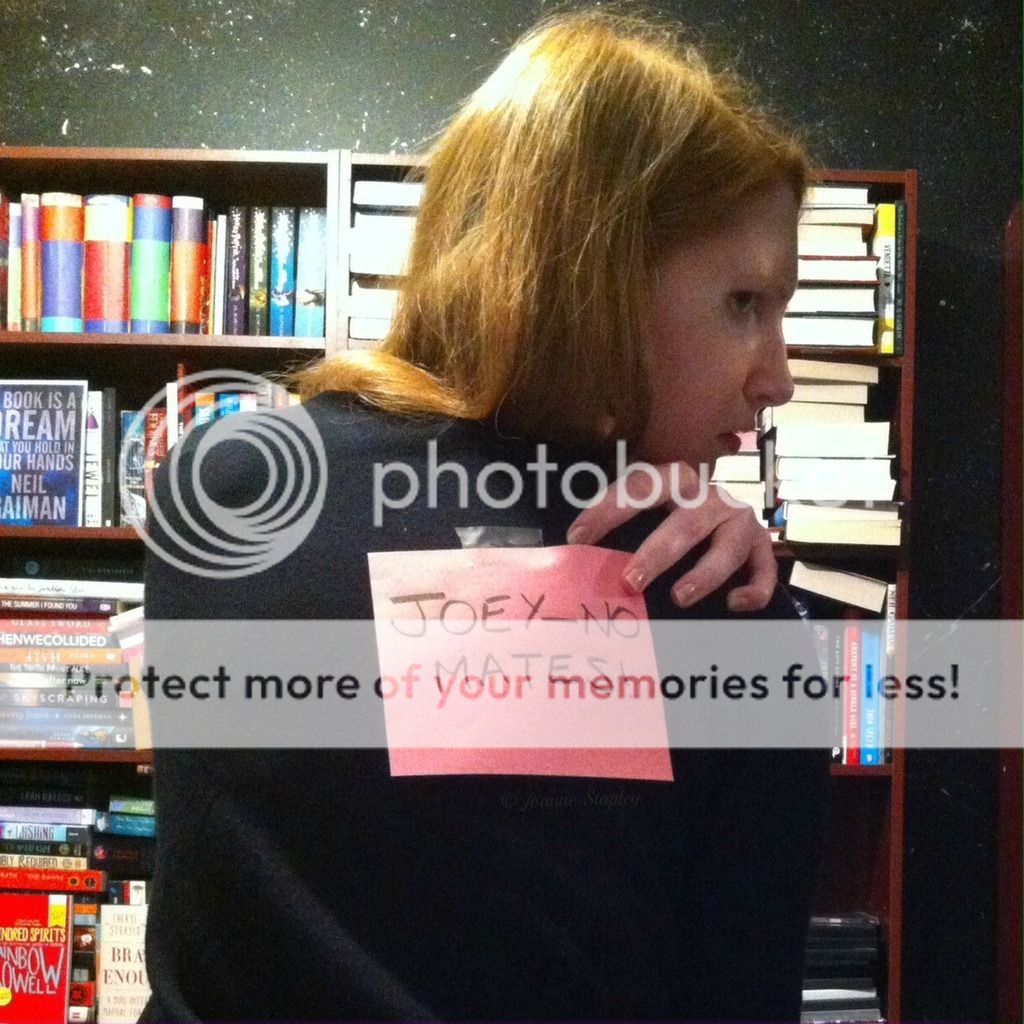
Joey-No-MatesIf I was to count the number of friends I have, and treat it seriously, I would not get past one. Of course, I have work colleagues I get one with, people from the YA community who I love chatting to, and friends of the family who I think of warmly. But when it comes to real friends - the kind that are there for you no matter what; who you can talk to all the time about absolutely anything; who know you inside out and back to front, all your flaws, and love you anyway; who you can confide in and be silly with and go to for assurance when you're having a wobble - of those kind of friends, I have one. My best friend. And he lives in Belfast, while I live in London.

This hasn't been a problem for me. I've not felt lonely or like something is lacking from my life. I have a very close family, and we spend a lot of time together, and they've come to be friends, too. But at the end of last year, I came to realise that I don't really have a great social life. With a lack of more friends, perhaps I'm missing out on...something. Fun, sure - nights out, lunch dates, catching up over coffee - but also something more. People help you grow, right? They challenge you and educate you and give you a different perspect. My best mate does a fantastic job at this, but maybe I could do with a few more people in my life? And experience more things because of those people?

I decided that I was going to make an effort to try and make more friends this year. For those of you who don't know, #DrinkYA is one of many social events for those in that YA communinity - readers, bloggers, authors, publishing people - to get together and just hang out, chat, and have a drink, organised by the brilliant Jim. I went to my first #DrinkYA event in January, hoping to meet new people, have fun talking about books, and hopefully make some friends in the process.

I have always been quite shy. As a child, I was painfully shy; I remember once hiding in the bathroom when family were visiting my Nan, because I didn't know them well, and I got very nervous and didn't want to talk to them. It's got better as I've got older, university and work have helped, but I still find talking to people I don't know difficult. It's not something that comes easy to me, and I have to work at it. "Don't use small talk. Say something interesting, Stop feeling so nervous. Compliment them, maybe. Look them in the eye. Listen to what they're actually saying." To some I might seem stand-offish and rude, but I'm not, I'm just shy.

But I didn't realise just how socially anxious I was until #DrinkYA. (I'm not talking about Social Anxiety Disorder here, but social anxiety. The latter can lead into the former, but it's not a mental illness.) I went to the event feeling a little nervous, but generally pretty excited. Until I got there and realised in a group of around 30 people, there were only two I knew. It was overwhelming, and I became so uncomfortable. From my intro post, you might think I was a strong person who is happy in her skin and with who she is, and doesn't really care what other people think. And for the most part, I am. But at #DrinkYA, I crumbled.

Jim did introduce me to a number of people, and everyone was lovely. But I struggled with finding things to say. I let them lead the conversation and followed them, asking questions, trying to say interesting things, but I was like a rabbit in the headlights. I felt like I was being humoured, like they were taking pity on me, but weren't really interested. It's hard to describe how I felt. There were all these people, and they were going to judge me and find me lacking, and I just wanted to escape. So I wouldn't have to talk, so I wouldn't have to be judged. It was also hard because everyone else seemed to know each other from other social or bookish events, which I can't always attend because of work, and I was there on the sidelines. So not only was I struggling to talk to people I didn't know, I also felt like an outsider. I even went to the toilet at one point, just to get away from everyone. For a little bit of peace, a little bit of quiet. With my head in my hands, feeling like an idiot. Eventually, I pasted on a smile and went back up, but it was just as bad. As I said, everyone was lovely - I wasn't being judged, I wasn't being pitied, these people were there to hang out and chat just like me. But that's how my social anxiety made me feel, and it was unbearable. I lasted two hours before leaving, making my way home on the bus, feeling like a failure. How was I supposed to make friends, when I can't even handle meeting new people?

A few days after, I had a talk with myself. I wasn't a failure. So big groups are obviously not for me, I can't handle being around so many people I don't know. But smaller groups? I can do that. I organised a get-together with a few people over coffee, and although that was a little awkward at times, I was fine. An old friend from way back got in touch asking to meet up this year, and we had a drink together one night, getting to know each other again and reliving old times. It was a great night! And I went to a gallery with a blogger from the US who is studying here for a few months. Fewer people, but a step in the right direction.

I still have just the one friend, but we're only in the third month of the year. There's time. And I'm hoping that seeing more people at events and organising get-togethers will help me get there. There are several people I know that I would so love to be friends with. People who are so smart, who are just so cool and inspiring, who just seem like so much fun. But it's not really the done thing to go up to people and say, "Hey, I think you're awesome. Please be my friend?" Needy and creepy, much? But I'm sure I'll get there.

And if you see me at an event in the future, and I'm kind of quiet or on my own or not saying very much, please don't feel badly of me. I'm not being rude, I don't think I'm better than you, nor am I not interested. I'm just shy, and I'm probably feeling nervous about talking to you, and maybe struggling for something to say. If you know me online, and want to, please do come over and say hi. You've no idea how much that would mean to me when I'm struggling, how much it would help.

Jo's signature

-
If you enjoyed this post, you can find more on:
Bloglovin' | Twitter | Jo's Scribbles

Friday, 4 March 2016

Look at Me, I'm Sandra Dee!

knickers on the floor - Look at Me, I'm Sandra DeeI'm 28-years-old and I'm a virgin.

I'm a virgin by choice, but it's not something I really like talking about. I'm not ashamed of being a virgin - as I said, I choose to be - but I'm tired of the shock on people's faces when I say so, their exclamations of, "Why?!", the disbelief in their voice. Immediately after the shock, I can tell from their faces, without me having said another word yet, their judgemental thoughts. We live in a society where being a virgin past your late teens is unacceptable. If you're not having sex as a teenager, you're weird. You're also "frigid". That, or no-one wants you, because you're so ugly. Or you're a lesbian*. Maybe an ugly lesbian.

What?!

There is so much pressure to lose your virginity at a young age - not necessarily because you want to, but because you don't want do deal with all the crap from others, you don't want to be that girl. Nor do you want to be the last virgin in a group of experienced friends. It's also some kind of stamp of approval: I have had sex, so I'm wanted, ergo I am attractive. Also, no teenage boy** is going to stick around if you don't "put out". A lot of girls will have sex not for their own pleasure, but to please their sexual partner. I remember my best mate telling me he was on the bus once when he overheard two young teenage girls talking. One said to the other, "He'll like me if I give him a blow job." Does that not make you feel so unbelievably sad?

Not only should you not be a virgin, but you should also have a certain level of sexual experience. It almost seems like guys feel it's a given that you would be happy to perform certain sexual acts, or have sex in certain positions. I think this is probably down to porn; these acts, these positions are just what's done. Is there really any conversation any more between sexual partners - at any age - about what they're both comfortable and happy with, and what they're not?

Back to me. I am a virgin because, for me, sex has to mean something. As a teenager, I wasn't as interested in boys as my friends were; I fancied boys, but I didn't want to kiss them, let alone anything else. It just wasn't what I wanted, what I was ready for. And I wasn't going to be dictated to, and forced into having sex with someone when I didn't want to, because it was uncool to be a virgin. I feel the same way now; I will not have sex if I'm not ready for it.

As things stand now, I wouldn't say I'm not ready to have sex in general, but as sex must mean something to me, there has to be that relationship there; there needs to be trust, and while I don't think I necessarily have to be in love with the guy, there has to be feelings involved, from both of us. I am not in a relationship, and so I've not had sex. Perhaps if I had been a number of years ago, I would no longer be a virgin.

I have no problem with other people having casual sex, but that's just not for me. The idea of a meaningless one night stand is a massive turn off. There is nothing about the idea that appeals to me. I did flirt with the idea of casual sex once. As a child, I was brought up being told that sex is something that happens between two people when they love each other. I know this isn't the case now for everyone, but it's an idea that stuck with me. I wondered if how I felt about sex was down to how I'd been brought up. Does it have to mean something because that's what I actually want, or does it have to mean something because I'm a "good" girl, and that's what I was brought up to believe? So when a really hot guy made it pretty clear all he was interested in was sex, I did think about it. Did I want to have sex with him? He definitely turned me on, and I enjoyed thinking about it... but in the end, the thought of actually having sex with him, when we meant nothing to each other, just left me feeling cold. So this isn't down to how I was brought up, but what I actually feel.

And so far, it's not been much of a problem. I've had two sexual experiences. One wasn't so great; the guy tried to lead us in a certain direction, and when I stopped him, he responded with, "I didn't think so." And although he acted like it wasn't a problem, he continued to try several times more, and I kept having to stop him. He was a bit of a dick, and was quite selfish, to the point where I wasn't being turned on by what he was doing, and I seriously worried I was one of those people who wouldn't enjoy sex.

The second time was a million times better. The guy didn't have any problems whatsoever with me being a virgin. He was perfectly happy to go at my pace, and would check I was happy with and enjoying what was happening, and ask if he could do this or do that. He stopped when I asked him to, and didn't go further than I wanted. He was ok with me not being ready to for certain things. He never rushed me, or pressured me, or expected anything more than what I was comfortable with. He was patient and unselfish. He made it all about me and my enjoyment. And it was amazing.

I do sometimes worry that I'm too old to still be a virgin, that no guy my own age would be willing to wait for me when he could quite easily get his leg over with someone else, whether in or out of a relationship. But I won't be made to feel I must have sex with a future boyfriend in order to get him to stay. Because of my second sexual experience, I already know it's not a problem for some.

I will not be told when to have sex. This is my body, and I get to choose what I do with it, when, and with whom.

And so do you. Your body - and your virginity - belongs to you. Everyone's experiences will be different, there's no right or wrong, it's about what you're comfortable with. We don't have to do anything we don't want to. We should not feel pressured into anything. And there's nothing wrong with exercising your right to say, "No."

There is absolutely no shame in being a virgin.

*I'm sure we all know that being a lesbian is not a bad thing. These are all the cruel things I heard shouted out in the school playground from immature teenagers, mainly boys. This isn't what I think.

**I'm not trying to be heteronormative. This post is based on my personal experience and that of those I knew when I was a teen.

Jo's signature

-
If you enjoyed this post, you can find more on:
Bloglovin' | Twitter | Jo's Scribbles

Friday, 19 February 2016

Hair Today - And Probably For Good

Girls Will Be Girls by Emer O'Toole and razorIn June last year, I read Girls Will Be Girls: Dressing Up, Playing Parts and Daring to Act Differently by Emer O’Toole, non-fic on feminism recommended to me by numerous people as a book to help me along my newbie feminist journey. It’s a book that talks about the role of Woman, how we act out that role and the costumes we wear as we perform our gender. Not only is Girls Will Be Girls absolutely fascinating and educational, it’s also a book that got me thinking about how I, personally, follow the script of Womanhood, and why.

There is one chapter in particular that really had me asking questions of myself: Oh Hair Lair Dahling! – a whole chapter devoted to body hair. O’Toole discusses the triggers that led her to stop shaving all together, and society’s idea of a hairless female body as feminine.
‘Hair became a symbol of all the crap about gender, femininity and what’s normal that we just accept as common sense when it’s clearly misogynistic. Body hair became a symbol of the extent to which the pressure on us to modify our bodies – merely to be considered appropriately feminine – was getting so much more extreme.’ (p138)
I finished this chapter full of questions. Shaving had become a beauty ritual that, until this point, I didn’t really think about. It was automatic: hair grew, I shaved, and so on it went. But O’Toole now had me questioning my personal grooming. Why did I shave? Who was I shaving for? At the time, I was shaving every day; shaving my legs, my underarms, my pubic area every day. I used to shave every three days, but shaving felt like such a chore every time, so when I saw someone say on a TV show that they shaved every day so they were always smooth, I thought I’d give it a go. And shaving became much quicker! You don’t have to be so careful when you’re shaving every day. Any hair you might accidentally miss will be taken care of tomorrow. Shaving every day was just easier. But why did I shave in the first place?

I decided I would conduct an experiment; I would change my shaving habits once it got cooler (because no-one wants to deal with the itch of regrowth in the height of summer), and really think about why I shaved. Although the removal of female body hair has happened for centuries, it only became what it is today fairly recently; check out this article by Renae Regehr on Everyday Feminism about the history of pubic hair removal. Not only does this article talk about the removal of pubic hair over time, but it also has some fascinating and shocking (at least to me) statistics about the number of women shaving today, and their reasons why – some of which, looking back on my own my own shaving history, used to be my own.

Once I hit puberty, I started shaving my legs and my underarms because that’s just what you did. Women didn’t have hairy legs or hairy armpits. I knew this because my mum shaved, and adverts for shaving and waxing products were all over the TV. Women had “silky smooth” legs. It was the done thing. When I bought my first razor, I felt like such a grown up! It was part of the rite of passage; I had started my period, my boobs were growing, and I now had a razor and was shaving – I was becoming a woman!

It was a little while before I started shaving my bikini line, and that only started once I noticed hair start poking out the side of my underwear. I was about 14 then, and this coincided with me reading my friends’ women’s magazines, which kept mentioning the landing strip. They were all talking about that style, and so, to my mind, it was “normal” to having a landing strip. It was sexy, it was feminine. I wanted to be normal, and so I complied. Really, women’s magazines have a lot to answer for.

I started shaving too soon, though, because I soon started believing that shaving caused more hair to grow; rather than just having a triangle of hair over my pubic bone that grew once I hit puberty, hair had now started to grow underneath, and what the hell?! No, no, no. I had never heard of any woman having hair underneath. I didn’t ask about it, I just got rid of it. It shouldn’t be there, it needs to go, now. This, of course, is completely ridiculous, but I was so ashamed and embarrassed of having hair grow in the “wrong” places, it just had to go.

Skip several years to my late teens when I a guy I was completely infatuated with mentioned that he liked the bare, completely shaved look. Now, at the time I knew there was no-way he would be getting any where near my naked body any time soon, so there was no way he’d know whether I had pubic hair or not. But knowing that he liked women to have bare pubic areas, and the thought that if he was to see my pubic area he might be turned off... well. I guess I don’t really need to tell you that off it came. Let’s just take a second to really let that sink in.

I changed my body to be more attractive to a guy.

Are you as appalled as I am? Because... wow.

That guy ended up being not such a nice guy. He hurt me, and I was so angry. And it hit me that, for all intents and purposes, I had starting shaving off my pubic hair for a guy. Not for me, but for a guy. It was so bloody ridiculous! I was so angry with myself! I decided I wasn’t going to shave my pubic area to suit some guy (who, to be honest, didn’t even know about it; he never got that far) again. Back came the landing strip.

Only this time round, I found I wasn’t very good at keeping it tidy. I almost felt like I wanted a ruler to keep the lines straight. I was always trying to perfect the edges; I missed a bit there, but while trying to correct it, I shaved off more than necessary, so now there was a weird patch, so I need to straighten it out again and... it just got thinner and thinner. I had this wispy little line that wasn’t really worth so much agro, so in frustration, I shaved it all off again.

And this was the point I was at when I read Girls Will Be Girls. Completely bald and shaving every day. Once it started to get cooler in August, my experiment began. Baby steps at first, I decided to stop shaving my thighs, and tried to grow back my landing strip. My thinking was, it was winter and no-one is going to see my thighs; even if I wore a dress, I’d be wearing tights, so no-one would notice, like they might do my calves. That way, I could privately work out what exactly I thought of my leg hair once it grew, just for myself. Before my landing strip really grew too much of anything, I stopped and asked myself why a landing strip? If this experiment was about seeing what I thought of my body hair and why I shaved it off, surely there should be a fair amount of it there to base my opinions on. And so, aside from keeping a tidy bikini line, I grew it all back. I decided not to stop shaving my underarms, because I know I have ever liked the look of. Soon after starting this experiment, I read an article by YA author Louise O’Neill in which she talks body hair, and how a teenage girl she knew was insulted by a guy for having pubic hair. It had me so raging, and even more determined to go through with my experiment.

I am now over four months into my new shaving regime. I say “regime”, but it’s not, really. Although I’ve only stopped shaving my thighs, I can go several days to well over a week without shaving my calves without worrying about it. And what do I think of my body hair now? The hair on my thighs is nothing. It’s no worse than the hair on my arms. In fact, it’s better; my leg hair is almost colourless, so it’s only really noticeable if you’re looking for it, and it’s also softer than the hair on my arms – which I have never had a problem with. If my leg hair wasn’t practically colourless would my views be different? Maybe, but I couldn’t say as I’m ginger and have never had really dark leg hair. As things stand, it’s just there, and I’m completely indifferent to it. At the moment, I’m undecided as to whether or not I would stop shaving my calves altogether; on the one hand, I don’t think it would bother me to let it grow, but on the other, I actually like the feel of having soft, smooth, hairless calves. As I said, I don’t worry about shaving my calves all that regularly anyway, so it might be something I stop altogether at some point.

As for my pubic hair, I’ve kind of fallen in love with it – and this is mostly down to the fact that in the last few years I’ve come to really like my pale-skin-and-ginger-hair colouring. I’m liking this shock of colour below the expanse of my pale stomach. (Before you ask, no, it doesn’t look like copper wire. I had enough of those remarks at school, thank you.) In regards to the hair itself, I don’t dislike it. I have started shaving underneath again because I simply don’t like it there, but that’s my personal preference, it’s not for anyone else or for society. But the hair on my pubic bone, now it’s passed the itchy phase, doesn’t bother me. I don’t find it unsightly; on the contrary, I think it’s sexy.

It’s like choosing to let go of the crap society bashes us over the head with about how a woman should look, and giving up trying to conform to that, has lifted a weight off my shoulders, and coming to accept my body’s natural way of being (with a few adjustments for personal preference) has made me love my body more. I have my neat and tidy little lady garden, and I feel sexier and more womanly. Society might say it’s more feminine to be hairless, but I feel more so for embracing my body, as is.

No longer will I let society dictate to me how I should look, and I have Emer O’Toole to thank for that.

----------------------------------------------------------------

I asked a few ladies to join the discussion and share with us their shaving habits and their reasons.

Ailsa, 24:

"I only really shave when that area of the body is going to be visible. So I shave my armpits fairly regularly because I wear sleeveless dresses at work, but I really don’t shave my legs through the winter very often. If I’m going swimming though I will shave my bikini line so nothing peeks out from my swimsuit - I don’t really care about strangers seeing leg hair but I’m much more embarrassed about pubic hair showing - I think because it’s quite intimate, in a way? However in the summer if I’m on holiday somewhere with an outdoor pool where I might be sunbathing, rather than swimming for exercise, I will shave my legs, and I know I’m definitely doing that to ‘fit in’.
I do feel like I should [shave] for certain situations (like sunbathing by the pool) because that’s our cultural norm, for women to have shaved legs, no visible body hair. If I’m in a relationship then I shave my legs more often, and I do groom my bikini line back a lot more than if I’m just trying to keep everything covered by a swimsuit. That’s something that’s changed as I’ve got older - I had my first intimate relationship when I was 18 and I don’t think I ever ‘tidied up’ then."

Hayley, 19:

"I only started shaving because it makes me itch. That's it really. I can go a couple of months without shaving my legs. Armpits and pubic hair, not as long because of the itchiness. There's no time limit for me as such, I just do it when I feel it's necessary for me. But, at the end of the day, my body = my rules!"

Tanya, 39:

"I shave because I much prefer how it looks and feels, personally, but I don't do it nearly as often as previously because I have a partner who values every single hair on my body and, because he's not bothered, I force myself to allow the growth to be a bit more natural.
I would absolutely give [shaving] up completely tomorrow if I had a young daughter. I would be worried about her sense of self in society and would want, through example, to make it perfectly clear that it's entirely unnecessary to shave/remove hair from any part of one's body. It should only be internal desire that influences hair removal choices and, should my daughter express such desires, I would be sure to discuss the matter at length to explore why she felt the need, the subconscious societal pressure from the media and peers in an effort to educate her about her own choices and healthy body image."
Thank you to the women who contributed their own thoughts about their body hair and shaving habits. How about you? Why do you shave/wax? Would you ever try giving up the razor?

Jo's signature

-
If you enjoyed this post, you can find more on:
Bloglovin' | Twitter | Jo's Scribbles

Wednesday, 10 February 2016

What Makes Me, Me - Jo

JoWhen Jess first asked us to write this introductory post, my mind went blank. If I had to write about Who Am I, it would have been much easier. I could talk about how I’m devoted to my friends and family; how I don’t take myself too seriously and will happily make a fool of myself for a laugh; how I am the kind of person who finds the most ridiculous, unfunny jokes absolutely hilarious; how I’m an avid reader of YA and fantasy; how I’m a writer, a dreamer, an optimist who is always full of hope. But that’s all kind of surface stuff, and doesn’t go very deep. What Makes Me, Me, though - that digs a whole lot deeper.

If you were to look at me, you would see a young redhead, probably in her late teens, who is very slim. You would probably make some unconscious judgements on me based on my slim frame. Like others, you might think I’m anorexic, or that I’m obsessed with being skinny and on some ridiculous diet.